

Temporomandibular Joint (TMJ) Disorder: Causes, Symptoms, Prevention & Treatment Options
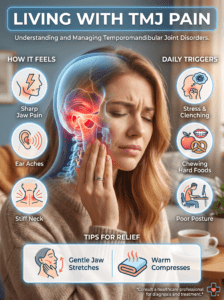
What is the Temporomandibular Joint (TMJ)
The temporomandibular joint (TMJ) is the hinge joint that connects your jawbone (mandible) to your skull’s temporal bone, located just in front of each ear. It’s one of the most complex joints in the body, allowing movements for chewing (mastication), speaking, swallowing, and yawning
Each person has two TMJs one on each side that work together.
Common Causes of TMJ Disorders
TMJ disorders (TMD) can result from multiple factors, often in combination:
- Physical Stress or Injury
– Jaw trauma (accidents, blows to the face)
– Whiplash injuries
– Teeth grinding (bruxism)
– Clenching jaw due to stress
– Poor posture affecting neck and jaw muscles
- Joint Structure Issues
– Arthritis (osteoarthritis or rheumatoid arthritis)
– Disc displacement or erosion
– Congenital or developmental abnormalities
- Dental Factors
– Misaligned bite (malocclusion)
– Missing teeth
– Orthodontic treatments
– Ill-fitting dental appliances
- Lifestyle & Habits
– Excessive gum chewing
– Nail biting
– Chewing on pens or other objects
– Poor ergonomics (computer posture)
- Other Health Conditions
– Fibromyalgia
– Chronic fatigue syndrome
– Sleep apnea
– Connective tissue diseases
Symptoms of TMJ Disorders
– Jaw & Facial Symptoms
– Jaw pain or tenderness
– Clicking, popping, or grating sounds when moving jaw
– Locking of the jaw joint (difficulty opening or closing mouth)
– Facial pain or swelling
– Changes in bite alignment
Pain Patterns
– Ear pain without infection
– Headaches, often mimicking migraines
– Neck and shoulder pain
– Toothaches without dental cause
– Pain behind the eyes
Functional Issues
– Difficulty chewing or biting
– Jaw fatigue, especially when eating
– Dizziness or vertigo
– Tinnitus (ringing in ears)
Prevention Strategies
-Avoid excessive jaw movements: Limit gum chewing, nail biting, and yawning widely
– Practice good posture: Keep head aligned over spine, especially when using computers/phones
– Eat soft foods: Cut food into small pieces, avoid hard or chewy foods
– Manage stress: Incorporate relaxation techniques (meditation, deep breathing)
Dental Care
– Regular dental check-ups
– Use a night guard if you grind teeth
– Address bite issues promptly
– Avoid chewing on one side only
Ergonomics
– Maintain proper workstation setup
– Use a headset for long phone calls
– Sleep on your back or side with proper pillow support
Treatment Options
Self-Care & Home Remedies
-Apply moist heat or cold packs to the jaw area
– Practice gentle jaw stretches and relaxation exercises
– Eat soft foods during flare-ups
– Over-the-counter pain relievers (NSAIDs like ibuprofen)
– Avoid extreme jaw movements (wide yawning, loud singing)
Medical Treatments
– Physical therapy: Jaw exercises, ultrasound, massage
– Medications:
– Muscle relaxants
– Anti-inflammatory drugs
– Low-dose antidepressants for pain control
– Corticosteroid injections for inflammation
– Dental appliances: Night guards, splints, bite correction devices
Advanced Treatments
– Transcutaneous electrical nerve stimulation (TENS)
– Trigger point injections
– Arthrocentesis (joint fluid removal)
– Arthroscopy (minimally invasive surgery)
– Open-joint surgery (for severe cases)
Alternative Therapies
– Acupuncture
– Biofeedback
– Cognitive behavioral therapy for stress management
– Chiropractic adjustments (when related to neck alignment)
When to Seek Professional Help
Consult a healthcare provider if you experience:
– Persistent pain or tenderness in your jaw
– Inability to open or close your jaw completely
– Clicking or popping accompanied by pain
– Significant changes in your bite
– Symptoms that interfere with daily activities
Recommended specialists: Dentists with TMJ expertise, oral surgeons, otolaryngologists (ENTs), or physical therapists specializing in orofacial pain.
Important Considerations
- TMJ disorders are often manageable with conservative treatments
- Most cases don’t require surgery
- Symptoms may fluctuate with stress, diet, and activity levels
- Multidisciplinary approach often yields best results
- Early intervention can prevent chronic issues.
Disclaimer: This guide is for informational purposes only and does not constitute medical advice. Always consult with qualified healthcare professionals for diagnosis and treatment of TMJ disorders.