

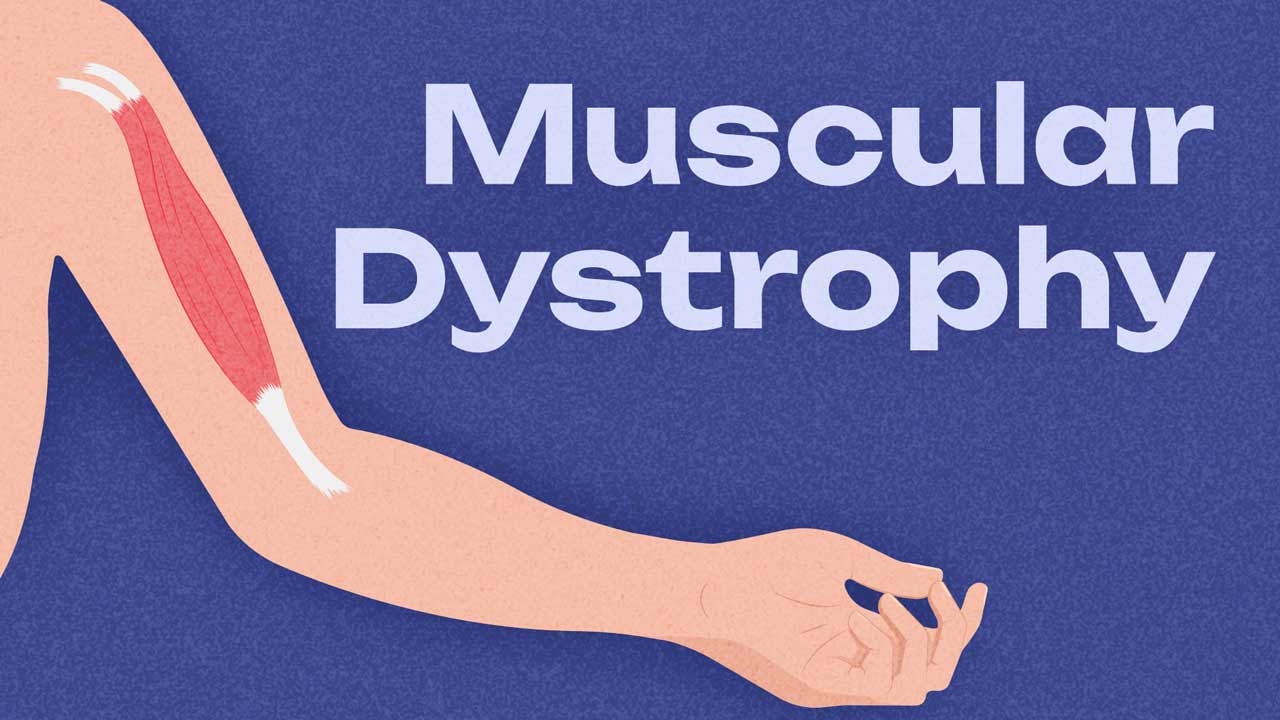
Muscular dystrophy (MD) is not a single disease but a group of over 30 genetic disorders characterized by progressive weakness and degeneration of skeletal muscles, which control voluntary movement. The term “dystrophy” comes from the Greek words dys (difficult or faulty) and troph (nourish), reflecting the condition’s impact on muscle health and function. While all forms of Muscular Dystrophy worsen over time, they vary widely in age of onset, severity, affected muscle groups, and progression rate. Some types also affect the heart, lungs, brain, and other organs, making it a complex condition that requires comprehensive care.
Muscular dystrophy is a genetically determined group of disorders that disrupt the production of proteins essential for healthy muscle structure and function. Normally, these proteins, such as dystrophin, which plays a critical role in strengthening muscle fibers and protecting them from injury during contraction and relaxation, help maintain muscle integrity. In people with MD, mutations in the genes responsible for these proteins lead to muscle damage that cannot be repaired effectively. Over time, healthy muscle tissue is replaced by fat and fibrous tissue, resulting in weakness, loss of mobility, and potential complications in other body systems.
Unlike muscle weakness caused by injury, inactivity, or other medical conditions, Muscular Dystrophy is progressive and irreversible in its natural course. However, early diagnosis and appropriate treatment can significantly improve quality of life, delay disability, and extend survival. According to PubMed, advances in multidisciplinary care have increased the life expectancy of people with Duchenne muscular dystrophy (the most common childhood form) from their late teens to their 30s and even 40s in some cases.
CAUSES AND RISK FACTORS
Genetic Basis
All forms of muscular dystrophy are caused by mutations in genes that code for muscle proteins. These mutations can be inherited from one or both parents, or they can occur spontaneously (de novo mutations) during early development, meaning neither parent carries the faulty gene.
Colon Cancer: Symptoms, Stages, Screening, and Treatment
Inheritance Patterns
Muscular Dystrophy is inherited in three main ways:
- X-linked recessive inheritance: The mutated gene is located on the X chromosome. Since males have only one X chromosome, they are more likely to develop the disease if they inherit the faulty gene. Females have two X chromosomes, so they usually act as carriers and may have mild or no symptoms. Duchenne and Becker muscular dystrophies follow this pattern.
- Autosomal dominant inheritance: The mutated gene is located on one of the 22 non-sex chromosomes. Only one copy of the faulty gene is needed to cause the disease, and each child of an affected parent has a 50% chance of inheriting it. Facioscapulohumeral and myotonic dystrophies are examples.
- Autosomal recessive inheritance: Both parents must carry and pass on a copy of the faulty gene. Children have a 25% chance of inheriting both copies and developing the disease, and a 50% chance of becoming carriers. Many forms of limb-girdle and congenital muscular dystrophies are inherited this way.
Risk Factors
- Family history: Having a parent or sibling with Muscular Dystrophy increases the risk of inheriting the condition.
- Gender: Males are more likely to be affected by X-linked forms such as Duchenne and Becker MD.
- Age: While Muscular Dystrophy can occur at any age, different types have typical onset ranges, from birth to adulthood.
Influenza (Flu): Symptoms, Causes, and Treatment Options
TYPES OF MUSCULAR DYSTROPHY
Muscular Dystrophy is classified based on several factors, including the muscles affected, age of onset, progression rate, and inheritance pattern. Here are the most common types:
- Duchenne Muscular Dystrophy (DMD)
- Prevalence: The most common childhood form, affecting approximately 14 in 100,000 males aged 5–24.
- Onset: Typically between ages 2 and 6.
- Cause: Mutations in the DMD gene lead to a complete absence of dystrophin protein.
- Symptoms: Delayed motor milestones (e.g., walking at 18 months or later), frequent falls, difficulty climbing stairs or rising from the floor, waddling gait, enlarged calf muscles (pseudohypertrophy), and learning or behavioral challenges.
- Progression: Rapidly progressive; most children lose the ability to walk by age 12. Complications include respiratory failure, cardiomyopathy, and scoliosis.
- Becker Muscular Dystrophy (BMD)
- Prevalence: Less common than DMD, affecting about 1.53 per 100,000 males.
- Onset: Teenage years to early adulthood, sometimes later.
- Cause: Mutations in the same DMD gene as DMD, but resulting in partially functional dystrophin.
- Symptoms: Similar to DMD but milder and slower progressing. Many people remain ambulatory into adulthood and have a near-normal life expectancy.
- Myotonic Dystrophy (DM)
- Prevalence: The most common adult form, affecting about 1 in 8,000 people worldwide.
- Onset: Typically between ages 20 and 30, but can occur in childhood or at birth.
- Types:
- DM1: Caused by repeated DNA sequences in the DMPK gene; affects face, neck, hands, and feet.
- DM2: Caused by mutations in the CNBP gene; affects proximal muscles more severely.
- Symptoms: Myotonia (delayed muscle relaxation after contraction), weakness, drooping eyelids, cataracts, heart problems, and cognitive issues.
- Facioscapulohumeral Muscular Dystrophy (FSHD)
- Prevalence: Affects approximately 1 in 20,000 people.
- Onset: Adolescence to early adulthood.
- Cause: Genetic changes lead to abnormal expression of certain genes in muscle cells.
- Symptoms: Weakness starts in the face (difficulty smiling, closing eyes), shoulders, and upper arms. Progression is slow, and most people have a normal lifespan.
- Limb-Girdle Muscular Dystrophy (LGMD)
- Prevalence: Rare, with over 20 subtypes identified.
- Onset: Childhood to adulthood.
- Cause: Mutations in various genes affecting muscle proteins.
- Symptoms: Progressive weakness in the muscles around the hips and shoulders, spreading to other areas. Severity varies widely among subtypes.
- Congenital Muscular Dystrophy (CMD)
- Prevalence: Rare, present at birth or before age 2.
- Cause: Mutations in genes involved in muscle development and structure.
- Symptoms: Generalized weakness, low muscle tone, joint deformities, and possible involvement of the brain, eyes, and heart. Severity ranges from mild to severe.
- Other Types
- Distal Muscular Dystrophy: Affects muscles in the hands, forearms, and lower legs; onset usually in adulthood, slow progression.
- Emery-Dreifuss Muscular Dystrophy: Affects shoulders, upper arms, and lower legs; causes joint stiffness and heart problems; onset in childhood.
- Oculopharyngeal Muscular Dystrophy: Affects eyelids, face, and throat muscles; onset in middle age, more common in certain ethnic groups.
Testosterone and Hormones: Optimization of Low Testosterone with Natural Remedy and Supplementation
SYMPTOMS OF MUSCULAR DYSTROPHY
Symptoms of muscular dystrophy vary depending on the type and stage of the disease, but the hallmark feature is progressive muscle weakness that worsens over time. Here are common symptoms by category:
Early Symptoms
- Delayed motor development (e.g., late walking, difficulty running or jumping)
- Frequent falls
- Muscle pain, stiffness, or cramping
- Abnormal gait (waddling, toe walking)
- Enlarged calf muscles (due to fat and connective tissue buildup)
Progressive Symptoms
- Loss of ability to walk, stand, or move independently
- Contractures (shortening of muscles or tendons, leading to joint stiffness and deformities)
- Scoliosis (curvature of the spine)
- Difficulty breathing or coughing
- Swallowing problems
- Heart palpitations, shortness of breath, or fatigue
- Cognitive or learning difficulties (in some types)
DIAGNOSIS
Diagnosing muscular dystrophy involves a combination of medical history, physical examination, and laboratory tests. Early diagnosis is crucial for starting treatment and managing complications effectively.
Steps in Diagnosis
- Medical and Family History: Doctors ask about symptoms, their progression, and any family history of muscle disorders.
- Physical Examination: Assessment of muscle strength, tone, reflexes, and range of motion. Patterns of weakness can help identify the type of MD.
- Blood Tests:
- Creatine kinase (CK): Elevated levels indicate muscle damage, often seen in early stages of DMD and BMD.
- Genetic testing: Identifies specific mutations to confirm the diagnosis and type of MD.
- Muscle Biopsy: A small sample of muscle tissue is removed and examined under a microscope to look for changes in muscle structure and protein levels.
- Imaging Tests: MRI or ultrasound can assess muscle quality, atrophy, and other abnormalities.
- Electromyography (EMG): Measures electrical activity in muscles to distinguish between muscle and nerve disorders.
- Heart and Lung Tests: Electrocardiogram (ECG), echocardiogram, and pulmonary function tests to monitor organ involvement.
TREATMENT OPTIONS FOR MUSCULAR DYSTROPHY
While there is currently no cure for muscular dystrophy, treatment focuses on managing symptoms, slowing progression, preventing complications, and improving quality of life. Treatment plans are individualized based on the type of MD, symptoms, and overall health.
Standard Treatments
- Medications:
- Corticosteroids: Such as prednisone and deflazacort, help maintain muscle strength and slow progression. However, long-term use can have side effects like weight gain, bone thinning, and increased infection risk.
- Targeted therapies: Antisense oligonucleotides (e.g., eteplirsen, golodirsen) work by “skipping” mutated parts of the gene to produce functional protein. These are approved for specific types of DMD.
- Heart medications: ACE inhibitors, beta-blockers, and diuretics to manage cardiomyopathy and heart failure.
- Other medications: Anticonvulsants for seizures, muscle relaxants for spasms, and pain relievers as needed.
- Therapies:
- Physical therapy: Exercises to maintain muscle strength, flexibility, and range of motion; helps prevent contractures and scoliosis.
- Occupational therapy: Teaches techniques to perform daily activities independently and recommends assistive devices.
- Respiratory therapy: Breathing exercises, chest physiotherapy, and ventilator support to manage breathing problems.
- Speech therapy: Helps with swallowing and communication difficulties.
- Assistive Devices: Braces, wheelchairs, walkers, canes, and orthotic inserts to improve mobility and support muscles.
- Surgery: May be needed to correct contractures, scoliosis, or heart problems; or to insert pacemakers or feeding tubes.
Erectile Dysfunction: Causes, Symptoms, Diagnosis & Treatment Options
COMPLICATIONS
If not properly managed, muscular dystrophy can lead to several serious complications:
- Respiratory failure: Weakness of the diaphragm and chest muscles can make breathing difficult, increasing the risk of pneumonia and other infections.
- Cardiomyopathy: Damage to the heart muscle can cause heart failure, arrhythmias, or sudden cardiac death, especially in DMD, BMD, and myotonic dystrophy.
- Scoliosis: Curvature of the spine can worsen breathing problems and cause pain or postural issues.
- Contractures: Stiff joints can limit movement and lead to deformities.
- Swallowing difficulties: Can cause malnutrition, weight loss, and aspiration pneumonia.
- Cognitive impairment: Some types of MD are associated with learning disabilities or developmental delays.
PREVENTION
Since muscular dystrophy is a genetic condition, it cannot be completely prevented. However, several measures can help reduce the risk of passing it on to future generations and minimize complications:
- Genetic Counseling: Helps families understand the inheritance pattern, assess the risk of having an affected child, and make informed decisions about family planning.
- Prenatal Testing: Tests such as amniocentesis or chorionic villus sampling (CVS) can detect MD in the fetus during pregnancy.
- Carrier Testing: Identifies people who carry the mutated gene but do not have symptoms, allowing them to understand their risk of passing it on.
- Early Intervention: Regular monitoring and early treatment can help manage symptoms, prevent complications, and improve outcomes.
LIFESTYLE AND MANAGEMENT TIPS
In addition to medical treatment, lifestyle changes can play an important role in managing muscular dystrophy and improving quality of life:
- Exercise: Low-impact, supervised exercises such as swimming, walking, or assisted cycling can help maintain muscle strength and flexibility. Avoid intense or eccentric exercises that can cause damage.
- Nutrition: A balanced diet rich in protein, vitamins, and minerals supports muscle health and overall well-being. Maintain a healthy weight to reduce strain on muscles and joints.
- Safety Modifications: Install handrails, grab bars, and non-slip surfaces at home to prevent falls. Use assistive devices as recommended.
- Energy Management: Pace activities, take regular rest breaks, and prioritize tasks to avoid fatigue.
- Emotional Support: Living with MD can be challenging. Seek support from family, friends, support groups, or mental health professionals to cope with stress and anxiety.
- Regular Check-ups: Visit your healthcare team regularly to monitor progress, adjust treatment, and detect complications early.
Esophageal Cancer: Symptoms, Causes, Diagnosis, and Treatment
Stroke: Causes, Symptoms, Diagnosis, and Treatment Options
Immune Boosters for Kids: Foods, Habits & Supplements That Actually Work