

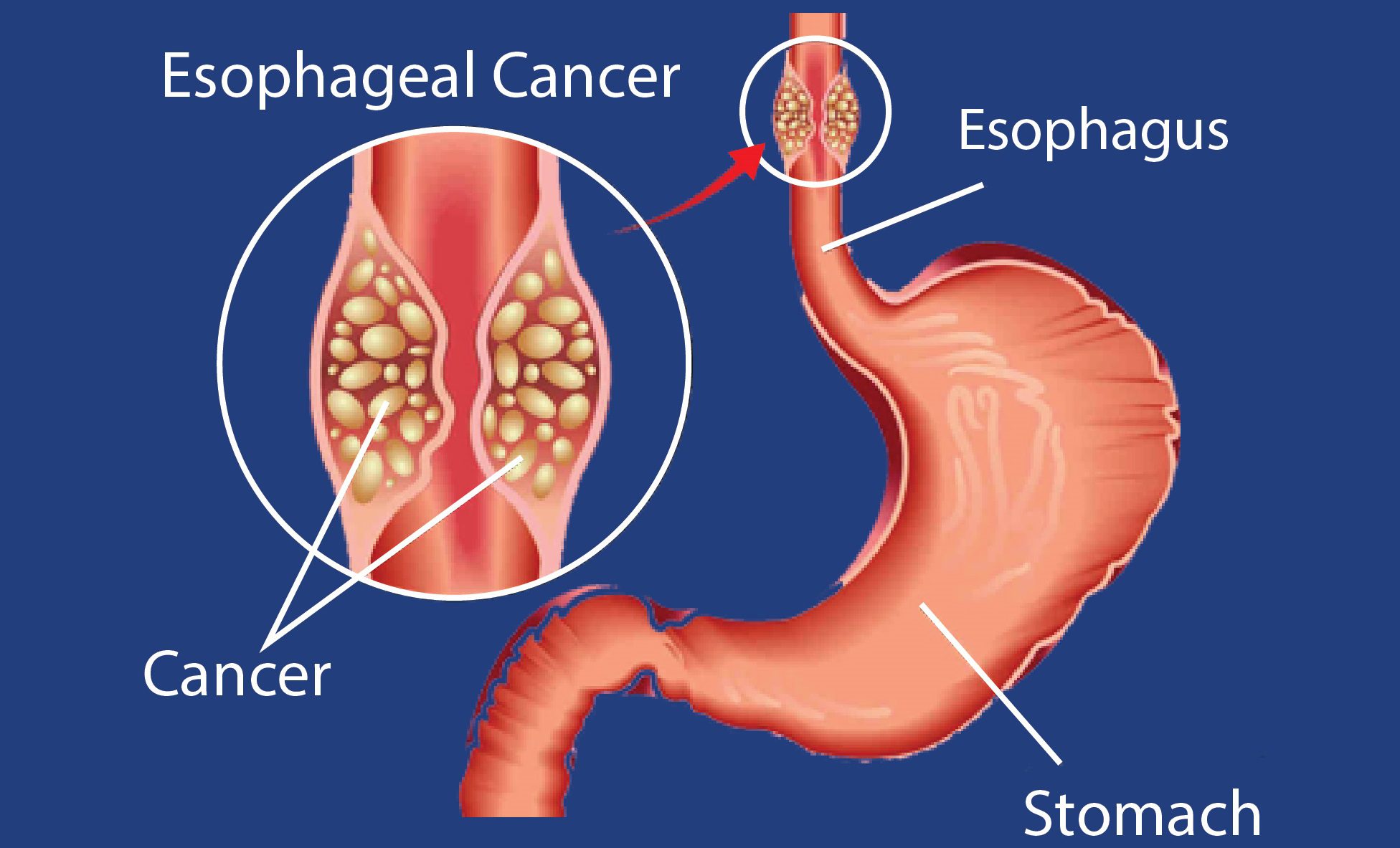
Esophageal cancer is a formidable malignancy that arises from the cells lining the esophagus (the muscular tube responsible for transporting food and liquids from the throat to the stomach). Despite significant advances in oncology, this cancer remains one of the most challenging to treat, largely because it is frequently diagnosed at an advanced stage when symptoms become unmistakable. Globally, esophageal cancer ranks as the fourth most common gastrointestinal cancer and carries the third-highest mortality rate among gastrointestinal malignancies in the United States.
The disease has two primary faces: squamous cell carcinoma, which predominates in the upper and middle esophagus and is strongly linked to lifestyle factors like smoking and alcohol, and adenocarcinoma, which develops in the lower esophagus near the stomach and is driven by chronic acid reflux and obesity. In recent decades, a striking epidemiological shift has occurred in Western nations, the incidence of squamous cell carcinoma has declined while adenocarcinoma has risen dramatically, largely due to the increasing prevalence of Barrett’s esophagus.
What Is Esophageal Cancer? Definition and Overview
Esophageal cancer is a malignant neoplasm originating from the epithelial cells lining the esophageal wall. Most esophageal cancers are either squamous cell carcinomas or adenocarcinomas, though rare entities such as melanoma, sarcoma, small cell carcinoma, or lymphoma can occasionally occur in the esophagus.
The esophagus is a hollow, muscular tube approximately 25 centimeters in length, connecting the pharynx to the stomach. Its wall consists of five distinct layers: the mucosa (innermost), submucosa, muscularis propria, adventitia, and surrounding periesophageal tissues. Cancer typically begins in the innermost mucosal layer and, if left untreated, invades progressively outward through these layers before metastasizing to distant organs via lymphatic or hematogenous routes. Common sites of disseminated disease include the liver, lungs, distant lymph nodes, bones, and peritoneum .
Colon Cancer: Symptoms, Stages, Screening, and Treatment
Two Main Histologic Types of Esophageal Cancer
| Characteristic | Squamous Cell Carcinoma (SCC) | Adenocarcinoma (AC) |
| Location | Upper and middle esophagus | Lower esophagus and gastroesophageal junction (GEJ) |
| Global Prevalence | Most common worldwide (~85% of cases) | Predominant in Western developed nations |
| Primary Risk Factors | Smoking, alcohol, hot beverages, low fruit/vegetable intake | GERD, Barrett’s esophagus, obesity, smoking |
| Demographic Trend | Declining in US over past 3 decades | Sharply increasing in US over past 3 decades |
| Cell of Origin | Squamous epithelial cells | Columnar glandular cells (often arising from Barrett metaplasia) |
CAUSES AND RISK FACTORS
The etiology of esophageal cancer is multifactorial, with distinct risk profiles for the two histologic subtypes. Understanding these risk factors is essential for both primary prevention and early detection strategies.
Risk Factors for Squamous Cell Carcinoma (SCC)
SCC is strongly associated with lifestyle exposures and socioeconomic factors. Smoking, alcohol consumption, and a diet low in fruits and vegetables are the main risk factors for esophageal SCC. Other contributors include:
- Tobacco use in any form – Cigarettes, cigars, pipes, and smokeless tobacco all increase risk.
- Excessive alcohol consumption – The combination of smoking and alcohol produces a synergistic effect, dramatically elevating risk beyond either factor alone.
- High-temperature beverages – Regularly drinking very hot tea or other hot liquids has been associated with increased SCC risk through repeated thermal injury to the esophageal mucosa.
- Low intake of fresh fruits and vegetables – Nutritional deficiencies may impair mucosal integrity and repair mechanisms.
- Human papillomavirus (HPV) infection – While the causal role remains debated, several studies have identified HPV as a potential contributory factor.
- Preexisting anatomical conditions – Achalasia, esophageal webs (Plummer-Vinson syndrome), and caustic ingestion injuries increase long-term risk.
- Genetic syndromes – Tylosis, Bloom syndrome, and Fanconi anemia confer substantial risk.
Risk Factors for Adenocarcinoma (AC)
In contrast, esophageal adenocarcinoma almost always arises from Barrett metaplasia, a precancerous condition in which the normal squamous lining is replaced by intestinal-type columnar epithelium following chronic acid exposure.
Influenza (Flu): Symptoms, Causes, and Treatment Options
Major risk factors for AC include:
- Gastroesophageal reflux disease (GERD) – Chronic, untreated reflux is the primary driver of Barrett’s esophagus and subsequent adenocarcinoma.
- Barrett’s esophagus – This condition is the strongest known risk factor; affected individuals have a 30- to 125-fold increased risk of developing adenocarcinoma compared to the general population.
- Obesity (high body mass index) – Excess abdominal adiposity increases intra-abdominal pressure, promoting reflux, and adipose tissue itself produces inflammatory cytokines that may promote carcinogenesis.
- Smoking – Unlike SCC, the association between smoking and AC is weaker but still significant.
- Diet low in fruits and vegetables – Protective effects of a plant-rich diet have been observed.
SYMPTOMS OF ESOPHAGEAL CANCER: RECOGNIZING THE WARNING SIGNS
One of the most challenging aspects of esophageal cancer is its asymptomatic or minimally symptomatic presentation in early stages. Symptoms typically emerge only when the tumor has grown sufficiently to narrow the esophageal lumen or invade surrounding structures. Early detection, therefore, relies on awareness of subtle changes and prompt evaluation of persistent symptoms.
Dysphagia: The Main Symptom
Difficulty swallowing (dysphagia) is the most common presenting symptom of esophageal cancer. The sensation is typically described as food “sticking” or “getting stuck” in the chest or throat. Notably, dysphagia in esophageal cancer follows a predictable progression:
- Early dysphagia – Difficulty swallowing solid foods (meat, bread, raw vegetables)
- Intermediate dysphagia – Several weeks later, difficulty swallowing soft foods (mashed potatoes, oatmeal)
- Late dysphagia – Eventually, difficulty swallowing liquids and even saliva
This progressive pattern reflects the gradual narrowing of the esophageal lumen by the growing tumor. Unfortunately, by the time dysphagia to solids appears, the cancer is often already locally advanced.
Testosterone and Hormones: Optimization of Low Testosterone with Natural Remedy and Supplementation
Other Common Symptoms of Esophageal Cancer
- Unintentional weight loss – Even when patients continue to eat reasonably well, cancer-related cachexia and reduced oral intake due to dysphagia lead to significant weight loss.
- Odynophagia (painful swallowing) – Chest pain that radiates to the back, often described as a burning or squeezing sensation.
- Hoarseness – Tumor invasion or compression of the recurrent laryngeal nerve, which controls the vocal cords.
- Persistent cough or choking – Aspiration of food or saliva due to esophageal obstruction or development of a tracheoesophageal fistula (abnormal connection between the esophagus and airway).
- Hematemesis (vomiting blood) or melena (black, tarry stools) – Indicates bleeding from the tumor.
- Regurgitation of undigested food – Particularly after meals.
Since early-stage esophageal cancer may cause no symptoms at all, the diagnosis is often delayed until advanced stages. Individuals with known risk factors, particularly chronic GERD, Barrett’s esophagus, or a family history, should discuss surveillance endoscopy with their healthcare provider, even in the absence of symptoms.
DIAGNOSIS OF ESOPHAGEAL CANCER
The diagnostic pathway for esophageal cancer involves a sequential approach integrating clinical assessment, endoscopic visualization, tissue biopsy, and imaging staging. Accurate staging is critical, as treatment decisions and prognosis depend heavily on the extent of disease.
Step 1: Endoscopy with Biopsy (Gold Standard)
Upper endoscopy (esophagogastroduodenoscopy or EGD) is the best diagnostic procedure when esophageal cancer is suspected. A flexible, lighted tube with a camera is passed through the mouth into the esophagus, allowing direct visualization of the mucosa .
During endoscopy, the gastroenterologist can identify suspicious lesions, which may appear as:
- A narrowing (stricture) of the esophagus
- An exophytic (protruding) mass or lump
- An abnormal flat area (plaque)
- Ulcerated or friable mucosa
Biopsy is performed during endoscopy, small tissue samples are removed for examination under a microscope (histopathology). Brush cytology (scraping loose cells) may also be obtained. Histologic confirmation is essential before initiating any cancer-directed therapy.
Stroke: Causes, Symptoms, Diagnosis, and Treatment Options
Step 2: Staging
Once cancer is confirmed, accurate staging determines the extent of disease: T (tumor depth), N (lymph node involvement), and M (metastasis).
Necessary imaging modalities include:
- Computed Tomography (CT) of the chest, abdomen, and pelvis: This assesses distant metastases (M stage) and provides anatomic information.
- Positron Emission Tomography (PET-CT) of the whole body: This detects metabolically active cancer deposits, including occult metastases not visible on CT. PET-CT is more sensitive than CT alone for identifying distant disease.
- Endoscopic Ultrasound (EUS): This specialized procedure combines endoscopy with high-frequency ultrasound, allowing detailed visualization of the five layers of the esophageal wall.
Erectile Dysfunction: Causes, Symptoms, Diagnosis & Treatment Options
The critical role of EUS in staging cannot be overstated. A 2025 narrative review published in Diagnostics emphasizes that EUS has emerged as the preferred modality for assessing tumor depth (T stage) and regional lymph node involvement (N stage) in esophageal squamous cell carcinoma. The ability of EUS to distinguish the five echolayers of the esophageal wall enables precise determination of tumor penetration, whether cancer is confined to the mucosa (T1a), invading the submucosa (T1b), penetrating the muscularis propria (T2), extending into the adventitia (T3), or invading adjacent structures (T4) .
When a suspicious lymph node is identified, EUS-guided fine-needle aspiration (EUS-FNA) or biopsy (EUS-FNB) provides cytologic or histologic confirmation, dramatically improving the accuracy of nodal staging and reducing false positives due to reactive inflammatory changes .
Other staging considerations:
- Bronchoscopy – For tumors in the upper or middle esophagus, to assess for tracheobronchial invasion
- Diagnostic laparoscopy – For lower esophageal or GEJ tumors, to assess for peritoneal spread (carcinomatosis), which occurs in 10–15% of cases
- Basic blood tests – Complete blood count, comprehensive metabolic panel, and nutritional markers
Step 3: Determining Histologic and Molecular Subtype
Pathologic examination of the biopsy specimen determines:
- Histology – Squamous cell carcinoma vs. adenocarcinoma vs. rare subtype
- Grade – Well, moderately, or poorly differentiated
- Biomarker status – HER2 amplification (in adenocarcinomas), PD-L1 expression (predicts immunotherapy response), MSI-H/dMMR status (identifies patients likely to respond to checkpoint inhibitors)
TREATMENT OPTIONS FOR ESOPHAGEAL CANCER
The treatment of esophageal cancer has evolved dramatically over the past decade, moving from single-modality approaches (surgery alone) to sophisticated multimodal strategies integrating chemotherapy, radiation, surgery, and immunotherapy. Treatment is highly individualized based on histology, stage, tumor location, patient performance status, and molecular biomarkers.
Early-Stage Disease (T1a or High-Grade Dysplasia)
For superficial cancers confined to the mucosa (T1a) or high-grade dysplasia, endoscopic resection may be curative without the need for surgery, chemotherapy, or radiation.
Endoscopic mucosal resection (EMR) or endoscopic submucosal dissection (ESD) allows precise removal of the cancerous tissue during endoscopy. These minimally invasive techniques preserve the esophagus, have low complication rates, and allow patients to avoid major surgery. Radiofrequency ablation (RFA) may be used for flat, dysplastic areas, particularly in the setting of Barrett’s esophagus.
Locally Advanced Disease (T1b–T4a, N0–N3, M0)
Locally advanced esophageal cancer (cancer that has penetrated beyond the mucosa but has not yet spread to distant organs) requires multimodal therapy. The optimal regimen depends on histology.
Immune Boosters for Kids: Foods, Habits & Supplements That Actually Work
For Squamous Cell Carcinoma (SCC)
- Neoadjuvant chemoradiotherapy (nCRT) followed by surgery has been the standard of care in Western countries. The CROSS regimen (carboplatin/paclitaxel with concurrent radiotherapy) improves survival compared to surgery alone.
- Definitive chemoradiotherapy (dCRT) for patients who are not surgical candidates or prefer organ preservation, definitive chemoradiotherapy offers a curative-intent nonsurgical option.
For Adenocarcinoma (AC)
- Perioperative chemotherapy (chemotherapy given both before and after surgery) has emerged as the preferred strategy. The FLOT regimen (fluorouracil, leucovorin, oxaliplatin, and docetaxel) has shown superiority over older regimens .
- According to a review in Annals of Esophagus, following the results of the ESOPEC trial, FLOT may supersede CROSS as the neoadjuvant regimen of choice for adenocarcinoma .
- Neoadjuvant chemoradiotherapy remains an alternative option, particularly for patients with bulky nodal disease.
The Evolving Role of Immunotherapy
Immunotherapy (immune checkpoint inhibitors that block PD-1/PD-L1) has revolutionized the management of esophageal cancer.
Current indications include:
- Adjuvant nivolumab – For patients with residual disease after neoadjuvant chemoradiotherapy followed by surgery (based on the CheckMate 577 trial). This has become the standard of care for high-risk patients .
- First-line treatment for advanced/metastatic disease – Immunotherapy combined with chemotherapy is now the recommended first-line treatment for advanced squamous cell carcinoma and is increasingly used for adenocarcinoma .
- MSI-H/dMMR tumors – For the subset of tumors with microsatellite instability or mismatch repair deficiency (approximately 1-2% of esophageal cancers), checkpoint inhibitors show exceptional activity, and non-operative management may be feasible in select cases .
- HER2-targeted therapy – For HER2-amplified adenocarcinomas (similar to gastric cancer), the addition of trastuzumab to chemotherapy is standard in metastatic disease, though its role in the curative setting remains investigational .
Surgery for Resectable Disease
Esophagectomy (surgical removal of part or all of the esophagus) is a major operation typically performed after neoadjuvant therapy. Surgical approaches include:
- Transhiatal esophagectomy – Avoiding a chest incision, suitable for lower esophageal tumors
- Ivor Lewis esophagectomy – Combined abdominal and right chest approach
- Minimally invasive esophagectomy (MIE) – Laparoscopic/thoracoscopic techniques that reduce morbidity
Sepsis: Causes, Symptoms, Diagnosis & Treatment Options
Following surgery, the remaining stomach is typically pulled up into the chest and connected to the remaining esophagus (gastric pull-up) or a segment of colon is used as a replacement.
Palliative and Symptom-Directed Therapy
For patients with incurable, metastatic disease or those unable to tolerate aggressive therapy, the focus shifts to symptom control and quality of life. Dysphagia, in particular, can be terrifying and distressing .
Palliative interventions include :
- Esophageal stent placement – A flexible metal mesh tube (self-expanding metal stent) is inserted across the obstructing tumor, mechanically holding the esophagus open.
- Laser therapy – A laser is used to burn away obstructing tumor tissue.
- Photodynamic therapy (PDT) – A light-sensitive dye is administered intravenously and preferentially absorbed by cancer cells. When activated by laser light during endoscopy, the dye destroys malignant tissue .
- Radiation therapy – External beam radiation can shrink tumors, reducing pain and dysphagia.
- Nutritional support – For patients unable to swallow adequately, a percutaneous endoscopic gastrostomy (PEG) tube can be placed through the abdominal wall directly into the stomach, allowing enteral feeding.
Complications
Esophageal cancer and its treatment are associated with substantial complications.
Disease-Related Complications
- Complete esophageal obstruction – In late stages, swallowing becomes impossible, and secretions build up in the mouth, which is extremely distressing.
- Tracheoesophageal fistula – An abnormal connection develops between the esophagus and trachea, causing coughing, choking, and recurrent aspiration pneumonia.
- Malignant ascites and bowel obstruction – Secondary to peritoneal carcinomatosis .
- Severe cachexia and malnutrition – Cancer-related wasting syndrome.
Treatment-Related Complications
- Post-esophagectomy complications – Anastomotic leak, chylothorax, vocal cord paralysis, pneumonia, and cardiac arrhythmias.
- Chemoradiotherapy toxicities – Esophagitis, nausea, myelosuppression, fatigue, pneumonitis.
- Immunotherapy-related adverse events – Colitis, pneumonitis, hepatitis, endocrinopathies (thyroiditis, hypophysitis, adrenal insufficiency).
Prevention Strategies for esophageal cancer
While not all cases of esophageal cancer are preventable, substantial risk reduction is achievable through lifestyle modification and medical management.
Primary Prevention (Risk Reduction)
- Tobacco cessation – Eliminating tobacco use is the single most impactful preventive measure for both SCC and AC.
- Moderate alcohol consumption – Limiting or avoiding alcohol reduces SCC risk.
- Weight management – Maintaining a healthy body weight reduces GERD and subsequent adenocarcinoma risk.
- Dietary modifications – A diet rich in fruits, vegetables, and fiber is protective. The 2025 UK Biobank study demonstrated that higher fiber intake was inversely associated with the risk of Barrett’s esophagus and esophageal adenocarcinoma .
- Avoiding very hot beverages – Allowing hot drinks to cool before consumption may reduce thermal injury.
Menstrual Disorders: Types, Causes, Symptoms & Treatment Options
Secondary Prevention (Early Detection)
Management of Barrett’s esophagus: Individuals with confirmed Barrett’s esophagus should undergo regular surveillance endoscopy (typically every 3–5 years) to detect dysplasia or early cancer. If high-grade dysplasia or early-stage cancer is identified, endoscopic eradication therapy (RFA, EMR, or ESD) can prevent progression to invasive adenocarcinoma.
Control of GERD: Effective management of chronic reflux with lifestyle measures (weight loss, head-of-bed elevation, avoiding late-night meals) and pharmacologic therapy (proton pump inhibitors) reduces ongoing esophageal injury.
Lifestyle and Management Tips for Patients and Survivors
For individuals diagnosed with esophageal cancer or those at high risk, proactive management strategies improve outcomes and quality of life.
Nutritional Support
- Small, frequent meals – Six to eight small meals per day are better tolerated than three large ones.
- Texture modification – Soft, pureed, or liquid nutritional supplements can bypass partial obstructions.
- Nutritional counseling – Working with a registered dietitian is essential to prevent malnutrition and maintain weight.
Swallowing Strategies
- Eat slowly and chew thoroughly
- Stay upright for at least 2 hours after meals
- Use liquid “washes” (sipping water after each bite) to help clear the esophagus
Psychosocial Support
- A diagnosis of esophageal cancer is emotionally devastating. Support groups, individual counseling, and psychiatric care should be integrated into the treatment plan.
- For patients receiving palliative care, advance care planning and open communication about goals of care are essential.
Survivorship Care
Following curative-intent treatment, survivors require long-term follow-up for:
- Surveillance for recurrence (typically with periodic CT or PET-CT)
- Management of post-esophagectomy symptoms (dumping syndrome, reflux, dysphagia, dietary restrictions)
- Nutritional monitoring and iron/vitamin B12 supplementation (due to altered absorption)
Prevention remains the most powerful tool. Tobacco cessation, weight management, dietary modification (increased fiber intake, a prudent dietary pattern), and effective control of GERD can substantially reduce risk. For individuals with Barrett’s esophagus, regular surveillance endoscopy enables early detection of dysplasia and cancer, when curative endoscopic interventions are possible.
Tuberculosis (TB): Symptoms, Diagnosis, and Treatment
The message for patients and clinicians alike is clear: persistent dysphagia, particularly progressive difficulty swallowing solid foods, warrants prompt endoscopic evaluation. Early diagnosis remains the single most important determinant of survival. With ongoing advances in targeted therapy, immunotherapy, and personalized medicine, the future for patients with esophageal cancer is gradually becoming brighter.
Frequently Asked Questions (FAQs) about Esophageal Cancer
- What is the survival rate for esophageal cancer?
Survival rates have improved in recent years due to advances in immunotherapy and multimodal therapy. According to current data, about 22% of people with esophageal cancer survive for at least 5 years after diagnosis . Patients with more localized cancers confined to the esophagus have significantly higher survival rates than those whose cancer has spread to lymph nodes or distant sites . However, because most patients are diagnosed at advanced stages, esophageal cancer remains an aggressive disease with a high overall death rate.
- Is esophageal cancer curable?
Yes, esophageal cancer can be curable when detected early. For high-grade dysplasia or very early (T1a) cancers confined to the superficial mucosa, endoscopic resection achieves cure rates exceeding 90% without the need for surgery, chemotherapy, or radiation. For locally advanced disease (T1b-T4a), multimodal therapy (chemotherapy/chemoradiotherapy followed by surgery) offers the potential for cure, though recurrence rates remain substantial. Once cancer has metastasized to distant organs (stage IV), cure is generally not possible, though treatment can extend survival, control symptoms, and maintain quality of life.
- What is the difference between Barrett’s esophagus and esophageal cancer?
Barrett’s esophagus is a precancerous condition, not cancer itself. It occurs when the normal squamous lining of the lower esophagus is replaced by intestinal-type columnar epithelium as a result of chronic gastroesophageal reflux disease (GERD). Barrett’s esophagus increases the risk of developing esophageal adenocarcinoma by 30- to 125-fold compared to the general population. However, the vast majority of people with Barrett’s esophagus never develop cancer. Regular surveillance endoscopy allows detection of dysplasia (precancerous changes) or early cancer when curative interventions are possible.
- Does drinking hot tea cause esophageal cancer?
A large prospective study published in 2025 found that frequent tea intake was consistently associated with a modestly increased risk of GERD, Barrett’s esophagus, and esophageal adenocarcinoma (approximately 4–8% increased risk per unit of tea intake) . The mechanism is thought to be chronic thermal injury to the esophageal mucosa from very hot liquids. Allowing hot beverages to cool before drinking is a reasonable precaution, particularly for individuals with other risk factors such as smoking or GERD.
Congenital Heart Disease: Types, Causes, Symptoms & Treatment Options
- What treatments are available for advanced esophageal cancer that cannot be cured?
For incurable (metastatic or locally advanced unresectable) esophageal cancer, the focus shifts to palliative therapy aimed at controlling symptoms and maintaining quality of life. Options include:
- Systemic therapy – Immunotherapy combined with chemotherapy is now first-line therapy for advanced squamous cell carcinoma and is increasingly used for adenocarcinoma .
- Esophageal stenting – A metal mesh tube inserted endoscopically to hold the esophagus open, relieving dysphagia
- Laser therapy or photodynamic therapy – Destroys obstructing tumor tissue
- Radiation therapy – Reduces tumor bulk and relieves pain
- Nutritional support – Gastrostomy (PEG) tube feeding for patients unable to swallow
- Pain management and hospice care – Comprehensive symptom control
What Is Muscular Dystrophy? Causes, Types & Treatment Advancements