

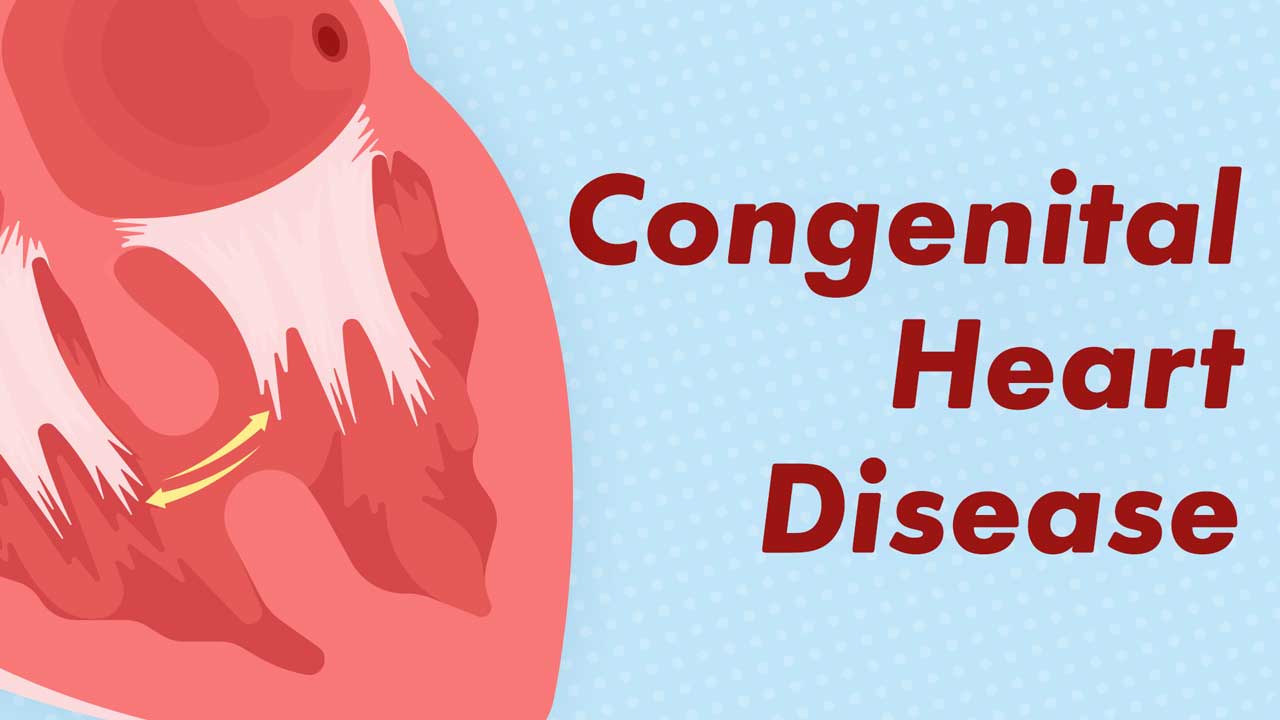
Congenital Heart Disease (CHD) represents the most common category of birth defects worldwide, affecting the structural development of the heart and great vessels. For medical professionals, students, and affected families, understanding the spectrum of Congenital Heart Disease, from minor lesions that require no intervention to complex anomalies needing neonatal surgery, is crucial.
Recent data indicates that nearly 1% of live births, or approximately 40,000 babies annually in the United States alone, are affected by some form of CHD. Thanks to revolutionary advances in surgical techniques and critical care, survival rates have dramatically improved. However, the journey does not end in childhood; the growing population of Adults with Congenital Heart Disease (ACHD) requires lifelong specialized monitoring.
WHAT IS CONGENITAL HEART DISEASE?
Congenital Heart Disease refers to a structural or functional anomaly of the heart or intrathoracic great vessels that arises during fetal development. The term “congenital” signifies that the condition is present at birth, though diagnosis may occur in utero, infancy, childhood, or even adulthood depending on the severity of the defect.
Colon Cancer: Symptoms, Stages, Screening, and Treatment
The heart develops from a simple tube-like structure into a fully formed four-chambered organ primarily during the first 6 to 8 weeks of pregnancy. If any disruption occurs during this critical window, whether genetic, environmental, or idiopathic, a defect can arise.
TYPES OF CONGENITAL HEART DISEASE
To understand the prognosis and treatment, CHD is typically classified by anatomical complexity and physiological impact. Rather than viewing them as a single entity, cardiologists categorize these defects to predict hemodynamic consequences.
CHD is generally divided into three major categories: Complex, Significant, and Minor .
- Complex Congenital Heart Disease
This category involves severe hypoplasia or atresia of chambers or valves. These conditions are often incompatible with life without immediate postnatal intervention.
- Hypoplastic Left Heart Syndrome (HLHS): The left side of the heart is severely underdeveloped.
- Pulmonary Atresia / Tricuspid Atresia: Absence or malformation of valves leading to blocked blood flow.
- Ebstein’s Anomaly: Malformation of the tricuspid valve.
- Significant Congenital Heart Disease
These defects require surgical or catheter-based intervention, typically within the first year of life.
- Tetralogy of Fallot (TOF): The most common cyanotic defect, featuring four anatomical abnormalities (VSD, pulmonary stenosis, overriding aorta, right ventricular hypertrophy).
- Transposition of the Great Arteries (TGA): The aorta and pulmonary artery are “swapped,” creating parallel circulations.
- Coarctation of the Aorta: A narrowing of the aorta that increases blood pressure荷.
- Minor Congenital Heart Disease
These are often acyanotic and may close spontaneously.
- Small Ventricular Septal Defect (VSD): A “hole” in the wall separating the lower chambers.
- Mild Pulmonary Stenosis: Narrowing of the pulmonary valve.
| Classification | Examples | Typical Severity |
| Complex | Hypoplastic Left Heart Syndrome, Pulmonary Atresia | Critical; requires surgery in days/hours |
| Significant | Tetralogy of Fallot, Transposition of Great Arteries | Requires repair in first 6-12 months |
| Minor | Small VSD, Mild Valvular Stenosis | May resolve spontaneously or require monitoring |
Influenza (Flu): Symptoms, Causes, and Treatment Options
CAUSES AND RISK FACTORS (ETIOLOGY)
In most cases, the exact cause of CHD remains unknown. However, a confluence of genetic and environmental factors have been identify to increase risk.
Genetic Factors
Genetics plays a substantial role. Specific chromosomal abnormalities are strongly associated with cardiac defects.
- Down Syndrome (Trisomy 21): Approximately 50% of children with Down syndrome have CHD, most commonly Atrioventricular Septal Defects (AVSD).
- Turner Syndrome (Monosomy X): Often associated with Coarctation of the Aorta and bicuspid aortic valve.
- 22q11.2 Deletion Syndrome: Highly associated with Tetralogy of Fallot and truncus arteriosus.
Maternal Health and Environmental Factors
The maternal-fetal environment is critical. Study has revealed that an impaired maternal-fetal environment (such as pre-eclampsia or intrauterine growth restriction) is common in CHD pregnancies and is associated with lower survival rates post-surgery.
Specific risk factors include:
- Maternal Diabetes: Pre-gestational diabetes (Type 1 or 2) increases the risk of CHD, likely due to hyperglycemia-induced oxidative stress on the developing heart tube.
- Infections: Rubella (German measles) infection during the first trimester can cause a triad of defects including PDA and pulmonary artery stenosis.
- Teratogens: Exposure to organic solvents, certain anti-seizure medications (benzodiazepines), and acne medications (retinoids) has been linked to increased CHD risk .
SIGNS AND SYMPTOMS OF CONGENITAL HEART DISEASE
The clinical presentation of CHD varies dramatically based on the physiology; specifically, whether the defect is acyanotic (blood oxygen levels are normal) or cyanotic (blood oxygen levels are low).
Symptoms in Newborns and Infants
Severe CHD often presents within the first few days or weeks of life.
- Cyanosis: A bluish tint to the lips, skin, or fingernails. This is the hallmark of “Blue Baby” syndromes like TGA or TOF.
- Tachypnea (Rapid Breathing): The body attempts to compensate for low oxygen or fluid buildup (heart failure).
- Poor Feeding & Failure to Thrive: Infants may tire out during breastfeeding and sweat excessively (diaphoresis) due to the high caloric demand of a inefficient heart.
- Heart Murmur: Detected via auscultation, though not all murmurs are pathological.
Testosterone and Hormones: Optimization of Low Testosterone with Natural Remedy and Supplementation
Symptoms in Older Children and Adults
Not all defects are caught in infancy. Some moderate defects (like moderate VSDs or valve issues) may present later.
- Exercise Intolerance: Getting easily winded during physical activity.
- Syncope (Fainting): Usually triggered by exertion.
- Palpitations: A sensation of a rapid or irregular heartbeat.
- Swelling (Edema): Fluid retention in the ankles, legs, or abdomen indicates heart failure.
Over 90% of babies born with heart defects now survive into adulthood, thanks to modern medicine. However, survivors remain at risk for late complications such as arrhythmias, heart failure, and endocarditis. Therefore, CHD patients require specialized transition of care from pediatric to adult teams, as care discontinuity is a major risk factor for mortality.
TREATMENT OPTIONS FOR CONGENITAL HEART DISEASE
The treatment options range from medical management to complex transplantation.
- Medical Management (Pharmacologic)
Medications do not “fix” the hole or valve, but they optimize the heart’s function until surgery or as long-term palliation.
- Prostaglandins: Used in the newborn period to keep the Ductus Arteriosus open (patent) in ductal-dependent lesions (e.g., HLHS, TGA).
- Diuretics (e.g., Furosemide): Reduce fluid overload in heart failure.
- Milrinone: A key inotrope used postoperatively to prevent Low Cardiac Output Syndrome (LCOS) .
- Catheter-Based Interventions (Interventional Cardiology)
Interventional cardiology has replaced open surgery for many simple defects.
- Device Closure: Using a catheter inserted via the groin, a device (like an Amplatzer occluder) is deployed to close ASDs or PDAs.
- Balloon Valvuloplasty: A balloon is inflated to stretch open a stenotic (narrow) valve, such as in Pulmonary Valve Stenosis.
- Surgical Repair
Complex anatomy requires open-heart surgery, often utilizing cardiopulmonary bypass (heart-lung machine).
- Neonatal Surgery: For conditions like TGA, the Arterial Switch Operation is performed within the first two weeks of life.
- Staged Palliation (Single Ventricle Pathway): For conditions like HLHS, the heart cannot be repaired into a biventricular system. The surgeon performs a series of surgeries (Norwood, Glenn, Fontan) to re-route blood flow directly to the lungs without a pumping ventricle in between.
- Postoperative Critical Care
The work does not end in the operating room. Postoperative management of CHD involves meticulous intensive care to avoid Low Cardiac Output Syndrome (LCOS), which affects up to 25% of infant patients. Management focuses on optimizing preload, reducing afterload (using milrinone), and maintaining tissue oxygenation. Refractory LCOS may require ECMO (Extracorporeal Membrane Oxygenation) .
Erectile Dysfunction: Causes, Symptoms, Diagnosis & Treatment Options
Prevention Strategies
While CHD cannot be prevented entirely (as many cases are genetic anomalies), risk reduction is possible.
- Glycemic Control: Women with diabetes should achieve strict glucose control preconception.
- Vaccination: Rubella vaccination prior to pregnancy is essential.
- Avoidance of Teratogens: No alcohol or isotretinoin during pregnancy.
- Folic Acid: Adequate periconceptional folic acid reduces the risk of several congenital anomalies, though its specific effect on CHD is still under investigation.
FREQUENTLY ASKED QUESTIONS (FAQs)
- Is Congenital Heart Disease curable?
“Cure” is a complex term. Many defects (like small VSDs) close spontaneously. Others are “repaired” successfully via surgery, allowing near-normal life. However, most repaired hearts still require lifelong surveillance for arrhythmias or valve deterioration. For conditions like Fontan circulation, there is no cure; only palliation.
- Can I live a normal life with Congenital Heart Disease?
Yes. According to the American Heart Association, over 90% of children with CHD survive to adulthood, and many live active, productive lives . However, “normal” includes adherence to regular cardiology follow-ups, even if you feel healthy, as subtle changes in heart function may develop over decades.
- How is Congenital Heart Disease treated in premature babies?
Treating CHD in premature infants is high-risk because their organs (lungs, brain, kidneys) are immature. Surgeons often delay surgery if possible, using medications (like prostaglandins or PGE inhibitors) to stabilize the ductus arteriosus until the baby gains weight (typically >2kg). If surgery is urgent, specific physiologic protocols are used to minimize CPB time.
- What is the success rate of Congenital Heart Surgery?
Success rates depend entirely on the complexity of the lesion. For simple defects like ASD closure, the mortality risk is near zero (<0.1%). For complex single-ventricle palliation (like the Norwood procedure for HLHS), survival to hospital discharge is significantly lower, though improving. The presence of a poor maternal-fetal environment has been shown to lower 36-month survival rates in these complex cases.
Esophageal Cancer: Symptoms, Causes, Diagnosis, and Treatment
Stroke: Causes, Symptoms, Diagnosis, and Treatment Options
Immune Boosters for Kids: Foods, Habits & Supplements That Actually Work