

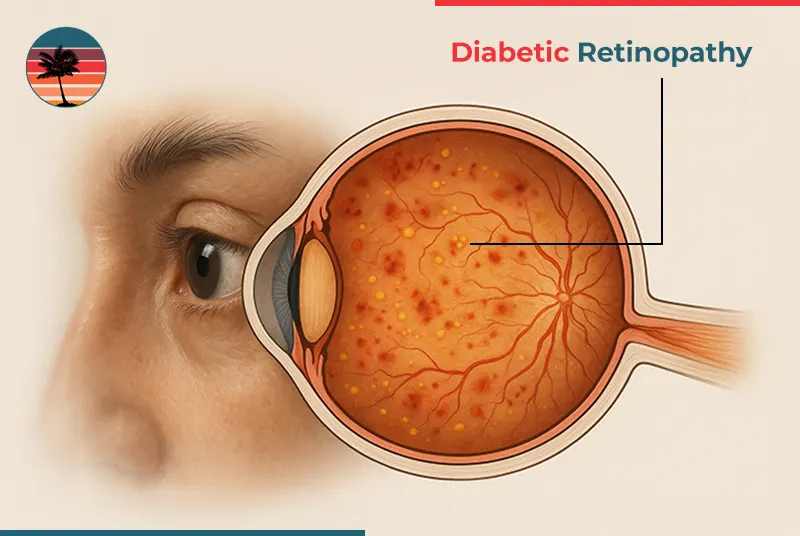
Diabetic retinopathy is a serious eye condition that affects millions worldwide, emerging as a leading cause of vision loss among people with diabetes. As diabetes rates continue to rise globally, understanding diabetic retinopathy, its causes, symptoms, diagnosis, and treatment options becomes crucial for prevention and management. According to the National Eye Institute, over time, more than half of people with diabetes will develop diabetic retinopathy.
What Is Diabetic Retinopathy?
Diabetic retinopathy is a diabetes complication that damages the blood vessels in the retina. This occurs when high blood sugar levels from diabetes harm these delicate vessels, leading to leakage, swelling, or abnormal growth. If left untreated, it can progress to blindness.
The condition develops in stages. Early on, it’s known as nonproliferative diabetic retinopathy (NPDR), where blood vessels weaken and leak fluid or blood into the retina, causing swelling, particularly in the macula (the central part responsible for sharp vision). This can lead to diabetic macular edema (DME), a common cause of vision loss. In advanced stages, called proliferative diabetic retinopathy (PDR), the retina’s blood supply is cut off, prompting the growth of new, fragile blood vessels that can bleed, form scar tissue, and even detach the retina.
Breast Cancer Symptoms, Screening, and Treatment: A Complete Guide
Diabetic retinopathy affects both eyes and is often asymptomatic in its initial phases, making regular screenings essential. It is the most common cause of vision loss in working-age adults in developed countries. According to Mayo Clinic, it can develop in anyone with type 1 or type 2 diabetes, with risks increasing based on disease duration and blood sugar control.
Related conditions include glaucoma and cataracts, which diabetes exacerbates. Early detection through annual eye exams can prevent up to 90% of diabetes-related blindness.
Causes of Diabetic Retinopathy
The primary cause of diabetic retinopathy is chronic high blood sugar (hyperglycemia) from poorly managed diabetes. Over time, excess glucose damages the tiny blood vessels nourishing the retina, making them leaky or blocked. This deprives the retina of oxygen and nutrients, triggering inflammation and further vessel abnormalities.
In NPDR, vessels form microaneurysms, small bulges that rupture and leak. As the condition advances to PDR, the eye attempts to compensate by growing new vessels (neovascularization), but these are abnormal and prone to hemorrhage. Fluid buildup can cause macular edema, distorting central vision. According to the American Optometric Association, high blood sugar weakens vessel walls, leading to fluid leakage and retinal swelling.
Other contributing factors include oxidative stress, inflammation, and changes in growth factors like vascular endothelial growth factor (VEGF), which promotes abnormal vessel growth. Gestational diabetes during pregnancy can also trigger it due to hormonal shifts and blood sugar fluctuations. While type 1 and type 2 diabetes are the main culprits, type 3c (pancreatogenic) diabetes shares similar risks.
Ear Infections: Causes, Symptoms, Diagnosis & Treatment Options
Environmental and lifestyle elements exacerbate causes: Smoking accelerates vessel damage, while obesity contributes to insulin resistance and hyperglycemia.
Risk Factors for Diabetic Retinopathy
Anyone with diabetes is at risk, but certain factors heighten susceptibility. The longer you have had diabetes, the greater the chance; nearly everyone with type 1 diabetes and most with type 2 will develop some form eventually. Poor blood sugar control, as measured by high A1C levels, is a major accelerator.
Demographic risks include being Black, Latino, or Native American, where prevalence is higher due to genetic and socioeconomic factors. High blood pressure (hypertension) and high cholesterol compound vessel damage, while pregnancy increases risk for women with pre-existing or gestational diabetes. Tobacco use and kidney disease also elevate chances.
Other risk factors include difficult-to-manage diabetes, cardiovascular diseases, and chronic kidney issues.
Modifiable risks like obesity and sedentary lifestyle can be addressed through diet and exercise. Family history plays a role, suggesting genetic predispositions. Regular monitoring of A1C, blood pressure (aim for below 140/80 mm Hg), and cholesterol can mitigate these.
Symptoms of Diabetic Retinopathy
Early diabetic retinopathy often presents no symptoms, which is why it has dubbed a “silent thief of sight.” As it progresses, signs emerge gradually. Common symptoms include blurred or fluctuating vision, difficulty reading or seeing distant objects, and dark or empty areas in your field of view.
Floaters (spots or dark strings drifting in your vision) are frequent, especially from blood leaks in PDR. Color perception may fade, with colors appearing washed out. Night vision worsens, and sudden vision loss can occur from vitreous hemorrhage or retinal detachment. Macular edema causes central vision distortion, making straight lines appear wavy.
Complications add symptoms: Glaucoma may cause eye pain and headaches, while retinal detachment triggers flashes of light or a curtain-like shadow over vision. Women during pregnancy might notice rapid changes.
Endometriosis: Causes, Symptoms, Diagnosis & Treatment Options
If you experience any vision alterations, consult an eye specialist promptly. symptoms like floaters, blurred vision, and vision loss warrant immediate medical attention, as early intervention is key.
Diagnosis of Diabetic Retinopathy
Diagnosis typically begins with a comprehensive dilated eye exam, where drops widen your pupils for a detailed retina view. This painless test detects vessel abnormalities, swelling, or new growth. It is recommended annually for diabetics or more frequently if retinopathy is present.
Advanced diagnosis tools include optical coherence tomography (OCT), which provides high-resolution cross-sections of the retina to measure thickness and detect fluid. Fluorescein angiography which involves injecting dye into a vein to highlight leaking or blocked vessels via photos. These tests help assess severity and guide treatment.
Additional exams like tonometry measure eye pressure for glaucoma. Early diagnosis via routine screenings can prevent progression.
Treatment Options for Diabetic Retinopathy
Treatment aims to slow progression and preserve vision, tailored to stage and severity. For early NPDR, monitoring and better diabetes control may suffice; no immediate intervention needed.
Diabetes Mellitus: Types, Causes, Symptoms & Effective Treatment Options
In advanced cases, options include anti-VEGF injections (e.g., ranibizumab, aflibercept) to block abnormal vessel growth and reduce swelling. These are administered in-office and may require repeats. Laser photocoagulation seals leaks or shrinks vessels, though it can affect peripheral vision. Vitrectomy surgery removes blood or scar tissue from the vitreous, addressing detachments.
Supportive care involves managing blood sugar, pressure, and cholesterol. Prognosis improves with early treatment.
Prevention and Living with Diabetic Retinopathy
Prevention centers on tight diabetes control: Maintain A1C below 7%, monitor blood sugar, eat healthily, exercise (150 minutes weekly), and quit smoking. Annual eye exams catch issues early.
Living with Diabetic Retinopathy requires adaptive strategies: Use low-vision aids, manage lighting, and join support groups. According to Cleveland Clinic, consistent blood sugar control can regress early changes.
Diabetic retinopathy is preventable and manageable with vigilance. By understanding causes, recognizing symptoms, pursuing timely diagnosis, and exploring treatments, you can safeguard your vision.